The Grooming Manual
Does Oily Skin Need Moisturizer?

There's a stubborn myth that gets spread around with other skincare tips that just won't die: the idea that if your face is oily, you should avoid moisturizer at all costs. People claim that if your sebum production is high, your skin barrier is fine, that using moisturizer would just mean clogging pores and that those products are only for dry skin.
The reasoning seems airtight on the surface. Adding moisture to already greasy skin with an oily complexion sounds redundant at best and catastrophic at worst, a recipe for clogged pores and full-on shine overload.
So you skip the lotion, reach for the strongest face wash you can find, and scrub until your skin feels tight and stripped clean. But that squeaky clean sensation is a sign that your skin is dangerously damaged with a reduced barrier function.
When you strip away its natural barrier, your skin goes into emergency mode, releasing more and more sebum to protect itself. That rebound oil hits harder and faster than before, leaving you convinced that moisture is the enemy and doubling down on the very habits making things worse.
Is moisturizer only for dry skin, or does oily skin need moisturizer? It doesn't just need it — it requires a precise, lightweight hydration strategy to break the excess oil production cycle once and for all.
What Causes Oily Skin?
Oily skin is caused by excessive sebum production. Your skin's oil production begins deep in the sebaceous glands, which pump out sebum to create a protective barrier against environmental damage and moisture loss. For many men, oily skin can be caused by:
- Genetic disposition high sebum production in the oil glands
- Higher testosterone levels
- Hormonal fluctuations, particularly shifts in cortisol from stress or androgens from diet and lifestyle factors
Environmental conditions are also a key component in how your skin behaves on any given day. Humidity traps moisture on the skin's surface and can make oil production feel relentless, while dry, heated indoor air tricks your skin into overcompensating with a flood of sebum.
The products you use — or refuse to use — send direct signals to your sebaceous glands about whether to ramp up sebum production or ease off. Harsh cleansers, alcohol-heavy toners, and abrasive scrubs impede your natural barrier function and trigger a response that leaves you shinier than before.
Does Oily Skin Need Moisturizer?
Yes, oily skin needs moisturizer. It's not just for dry, parched skin. Hydration and oil production are two entirely separate processes, and neglecting the first significantly worsens the second.
- Your skin cells require water to stay plump and flexible and to keep skin tissue healthy
- When they become dehydrated from cleansing and environmental exposure with no replenishment, your sebaceous glands interpret the resulting tightness and dullness as a barrier emergency.
- Those glands then accelerate oil output in an attempt to seal in whatever moisture remains, creating the greasy complexion you were trying to avoid in the first place.
Skipping moisturizer also compromises your skin's mantle, the thin protective film that has a barrier function that keeps bacteria out and hydration in. A damaged mantle leaves your face vulnerable to inflammation, breakouts, and that persistent greasy texture that makes oily skin so hard to manage. Adding a properly formulated, lightweight moisturizer gives your skin the hydration it craves and signals to your sebaceous glands that they can keep oil production stable. This also prevents parched tissue or a dehydrated complexion.
Can the Right Moisturizer Reduce Oil Production?
Yes, a moisturizer that's lightweight and oil-free can reduce oil production and improve barrier function. When you consistently deliver water-based hydration to your skin cells, the sebaceous glands gradually downshift because they're no longer receiving distress signals from a parched, compromised skin barrier.
This recalibration doesn't happen overnight. Expect a few weeks of consistent use before your skin trusts that hydration is arriving regularly and stops stockpiling oil as a backup plan. The result is:
- a measurable decrease in midday shine
- smaller-looking pores
- q more balanced complexion that doesn't swing wildly between tight and greasy
What Is the Best Moisturizer for Oily Skin?
The best moisturizer for oily skin is a lightweight, fast-absorbing formula made with humectant ingredients that delivers hydration without heaviness, uses non-comedogenic ingredients, and addresses your specific skin concerns beyond just oil control.
Men's skin is approximately 10 to 20% thicker than women's and produces significantly more sebum. Heavy creams and balms designed for dry skin types will clog your pores and amplify the shine, making them a non-starter for anyone dealing with excess oil.
Brickell formulates every moisturizer specifically for men's thicker, oil-prone skin, using high-performance ingredients that absorb quickly and get to work immediately. Our formulas are designed to prevent irritation and inflammatory oil responses. Choosing the right product from our line simply means matching your primary skin goal with the formula built to deliver it.
Everyday Use
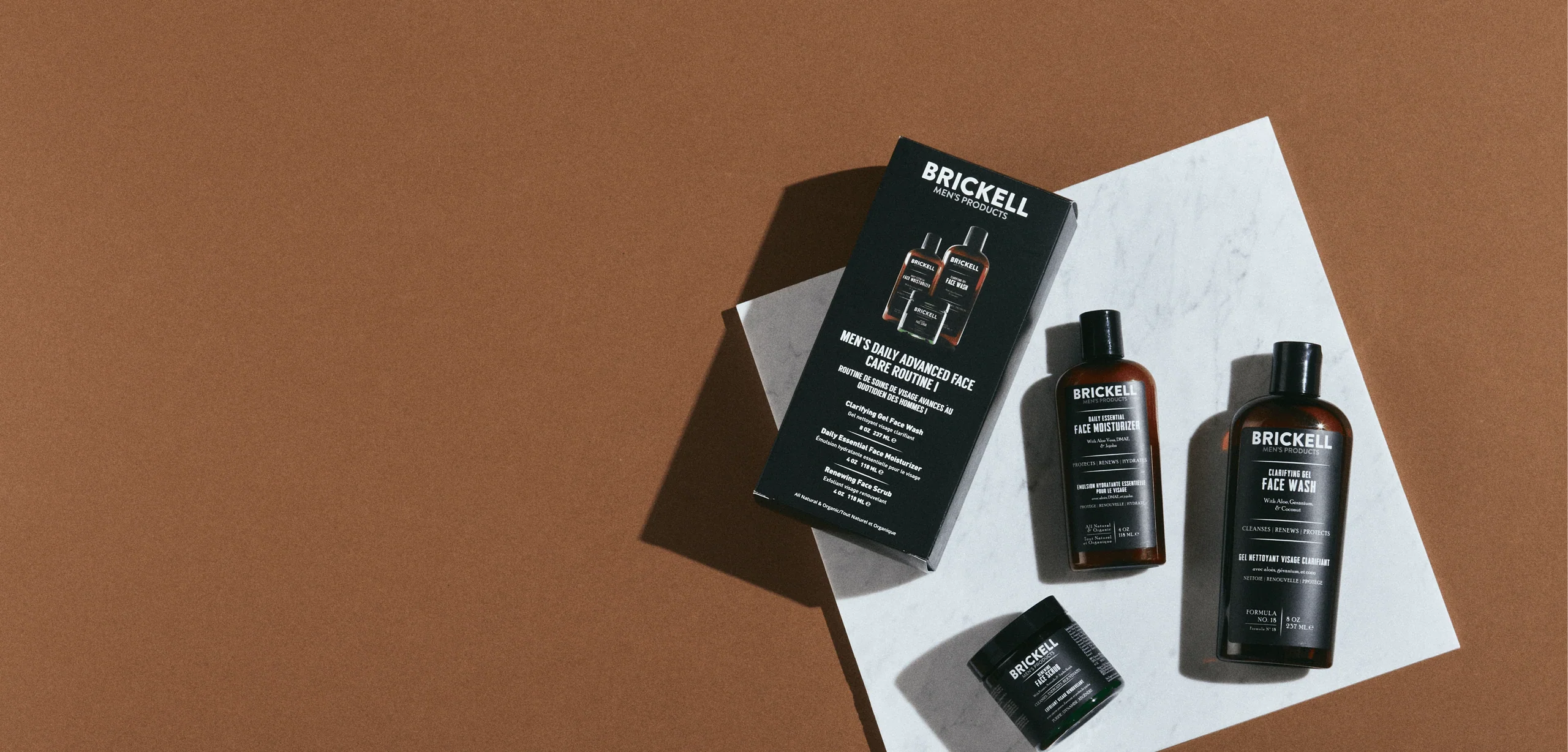
For oily skin that needs reliable, no-fuss hydration staple, look no further than the Daily Essential Face Moisturizer. It delivers exactly what the name promises: a lightweight, fast-absorbing dose of hydration that vanishes into the skin without leaving any residue or shine. Aloe vera and jojoba oil provide moisture that closely mimics your skin's natural sebum, so it absorbs in seconds rather than floating on the surface. This is your go-to for mornings and nights when you want a straightforward product that keeps oil production in check and your face looking fresh, not greasy with a healthy barrier function.
Breakout Prone Skin
What if oily production in skin comes with breakouts and blemish woes? Then you'll need a moisturizer that fights acne instead of fueling it. The Acne Controlling Face Moisturizer Treatment tackles this exact problem by combining lightweight hydration with proven acne-fighting ingredients that clear pores of dead cells while keeping oil balanced and acne at bay. Salicylic acid penetrates deep into pores to dissolve the debris and excess sebum that leads to pimples, while soothing botanicals and additional aloe prevent the irritation and dryness that trigger rebound oil. You get the hydration that oily and acne-prone skin needs, plus anti-inflammatory properties, without any heavy emollients that could cause new breakouts.
Grease-Free Sun Protection
Sunscreen for oily skin must deliver broad-spectrum protection in a base that disappears completely, and that's precisely what the Daily Defense Moisturizer accomplishes with SPF 20. Many men skip sun protection because traditional sunscreens have a thick white-cast layer that only amplifies oiliness and clogs pores, but this formula hydrates gently while shielding your skin from the UV damage that accelerates aging and dark spots. You get essential daily protection without the shin, the breakouts, or the heavy feel that makes you want to skip sunscreen entirely - which you shouldn't because of its many skin benefits.
Multipurpose Oil Control
The 6 in 1 Gel Face Moisturizer hydrates, mattifies, tightens pores, fights fine lines, soothes razor irritation, and protects your skin's barrier — all in one lightweight gel application. Its gel texture proves particularly effective for oily skin types because it absorbs almost instantly and imparts a subtle matte finish that keeps shine controlled for hours. If your routine has zero room for complexity, this single step replaces an entire shelf of products without overwhelming your oil-prone face. It's made with hyaluronic acid, which holds many times its weight in water and delivers water into skin tissue to keep it full and hydrated.
Anti-Aging for Oily Skin
What about anti-aging ingredients for oily skin that needs defense against lines, wrinkles, and uneven texture? The Rejuvenating Anti-Aging Gel Moisturizer delivers the wrinkle-fighting power of a concentrated serum and the lasting hydration of a cream, all in a lightweight gel format that oily skin can actually handle. Peptides and antioxidants work to firm skin and smooth expression lines while the oil-free hydration base absorbs cleanly — no clogged pores or added shine.
For those needing serious intervention, the Retinol Face Moisturizer Cream has proven age-fighting potency. Retinol accelerates cell turnover to reduce fine lines and refine rough texture, while the moisturizer base keeps your barrier intact so you avoid the flaking and tightness that lead to rebound greasiness. Start with two nights per week and let your skin adapt before building up frequency.
How Should You Use Moisturizer with Oily Skin?
The most effective approach pairs twice-daily application with consistent cleansing and strategic exfoliation, creating a routine that trains your sebaceous glands to ease off production permanently.
Ready to finally break the vicious cycle of oil production taking over your face? Follow these steps every morning and evening:
- Cleanse first, every time with a gentle, sulfate-free cleanser to remove excess oil, sweat, and debris without stripping your skin's protective barrier
- Pat the skin dry with a soft towel instead of rubbing, which can cause irritation and trigger an inflammatory oil response
- Apply moisturizer to slightly damp skin to lock in hydration and signal to your oil glands that no more hydration is needed
- Exfoliate 2-3 times per week before moisturizing to gently clear dead skin that traps oil inside your pores
- Use a lighter moisturizer formula in the morning, like a lightweight gel that absorbs fast and layers cleanly under SPF
- Never skip moisturizer in the evenings — going to bed with a stripped, dehydrated face guarantees an oily morning
Oily Skin FAQs
Will moisturizer make my oily skin worse?
No, a properly formulated moisturizer will reduce excess oil over time by correcting the dehydration that forces your sebaceous gland into overdrive. Skipping it leaves your skin barrier compromised, and your face stuck in a constant cycle of stripping and overproducing that gets worse with every wash.
Can I use face oil if I have oily skin?
Yes! Certain non-comedogenic oils like jojoba actually help regulate sebum production, as their molecular structure closely mimics your skin's natural oils, signaling to your glands that enough sebum is already present.
Do I still need sunscreen if my moisturizer has SPF?
A moisturizer with a built-in broad-spectrum SPF 20 or higher, like our Daily Defense Face Moisturizer, provides adequate protection for everyday exposure like commuting, running errands, and working near windows. For longer periods of sun exposure, you may need to apply a separate SPF formula or reapply your moisturizer.